
Last night my mom and I had a quality time together and we talked much of my childhood. She narrates to me that before I was born, when I was still in her womb, she often touches her tummy and tell stories or sing because she believes that the ‘angel’ inside her can hear, and I think thats what other moms do when pregnant. When I was born, she told me that she keeps on talking to me even tough I dont understand a thing because she believes that in this way I’ll learn how to talk sooner. When I learned how to talk close to fluent, she introduced me to the letters of the alphabet. Mom taught me how to write by guiding my hand and tracing the dots. This is how I got into writing and speaking and that’s the history of how Charles Earl Lyric Ycot started to communicating to the world. I have realized that a world without communication is a colorless living- just nothing. It connects us and binds us through orality and literacy.
The history of communication indicates that people started communicating through oral expression. Literary comes after orality but nonetheless it both complement each other that paves the way for the interconnectivity of the people
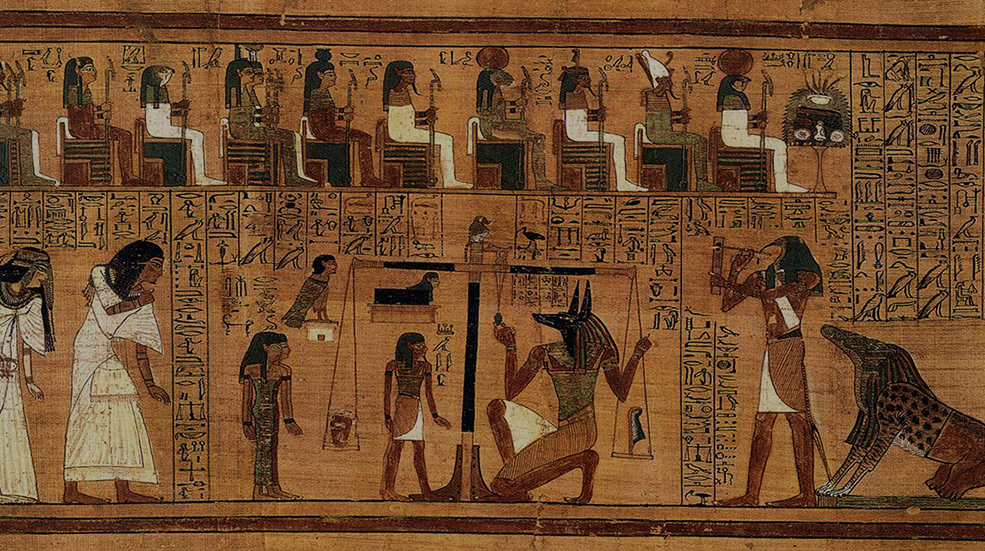
According to Ong (2002), the oral culture is without the knowledge of writings and literary culture is the knowledge of writings. Other than the difference in having knowledge of chirography, the literary culture and the oral culture still have more differences.
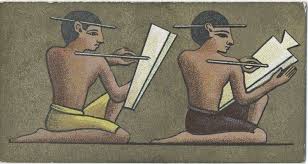
Let’s go back all the way to the beginning, to the time where there wasn’t any writing, nobody can write and no one has even thought of the possibility of writing. In the oral culture all they can do is recall, they can just say it again. In that kind of culture, they are absolutely incapable of the passing the information accurately, they can use markers but every time they taught, it will be a little bit different. There will be an alteration in the process of information transfer. Unlike in the literary culture where they know chirography, everything that happened is recorded, documented and written. In literary culture, you don’t have to call for a storytelling just to know something, just read.
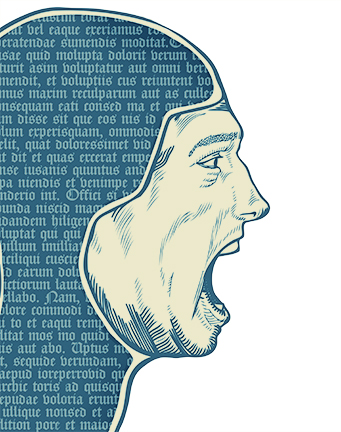
Communication can be done orally or literally. Aside from the differences of oral and literary cultures, they have similarities in the way that both culture gives information, it delivers a message. Both orality and literacy can deal with receiving and transferring information.
One of the natures of communication is its intersubjectivity, as mention in the book of Ong (2002), means that intersubjectivity in communication only happens when there is an exchange of messages between communicators. In intersubjective communication, the sender must send the information to the receiver so the receiver can respond. In the media communication, it is always a one-way communication, the information will just be placed in the receiver’s position.

Communication is a diverse field and one of its feature is the ‘media’ model of communication which is more into literacy, the media model of communication shows chirographic conditioning because in chirographic culture, written text is more informational and written text has a one-way direction of information. The purpose of this is to focus the information in the message.
People sometimes ask which communication culture is better. The question of which of the culture is better than the other then the answer is no. Again, orality and literacy is the foundation of communication and it both complement each other that paves the way for the development and connectivity of mankind.
References:
- Ong on the Differences between Orality and Literacy. Retrieved from
http://newlearningonline.com/literacies/chapter-1/ong-on-the-differences-between-orality-and-literacy - Ong, Walter J. (2002). Orality and literacy: The technologizing of the word.
London: Routledge, Taylor & Francis Group.

 Charles Earl Lyric Ycot