
Blog Feed
Protected: Sunday Beauty Queen
Protected: MODULE 6 ACTIVITY 7
Protected: Melba Maggay’s Pahiwatig:Kagawiang pang-komunikasyon ngFilipino
Protected: Module 3 Communication and Identity Construction , ACTIVITY 5
Protected: Module 3 Communication and Identity Construction, Activity 2
Protected: Digital Rhetoric
SAVING THE ‘LUNGS OF THE EARTH’

The Amazon rainforest is home of million of animal species, trees, local tribes and communities being the world’s largest tropical rainforest, it accommodates a very diverse biodiversity. For the past decades, deforestation is rampant, the protection of the rainforest remains an issue. Recently, an alarming cluster of wildfires are now burning the Amazon and it prompted millions of people around the world to voice out their concerns for the welfare of the “lungs of the Earth”.
The burning of the Amazon Rainforest is genuinely sad. The fire is said to be set intentional. I find it hard to believe in the Brazilian government accusation that a group of environmentalist are the one who started the fire. The newly elected president of Brazil is a rightist and he is for the development of the Amazon. I can presuppose that the burning of the Amazon is for the industrialization and expansion of agricultural lands.
What can we do about it? Its really hard to say that Ill protect the Amazon because I’m here in the Philippines and the Amazon is in Brazil, while it’s probably not a good idea to volunteer to actually fight the fires, unless you’re a trained firefighter, there are other ways to make a difference. Contact any of the organization. These organizations can, and do, make a difference. The best thing to do is to support those organization that ought to help the current situation in the Amazon like the Rainforest Action Network, Amazon Conservation Association, Amazon Conservation Team, Amazon Watch, and Rainforest Trust.
Other than donating to charities, we can also educate ourself about the crisis from a reliable source and we can be vocal online about the Amazon, climate change and encourage everyone through online platform to do just actions to the nature.
RHETORICAL SITUATION
Activity 1 on Module 2: Recognizing a Rhetorical Situation
A. Read Lloyd Bitzer’s (1968) essay on “The Rhetorical Situation” and answer the follow ing questions:
1.What is Bitzer’s definition of a rhetorical situation?
Rhetorical situation is defined by Blitzer as a natural context of persons, events, objects, relations, and exigence which strongly invites utterance. According to Blitzers, rhetoric is situational means: (1) rhetorical discourse comes into existence as a response to situation; (2) a speech is given rhetorical significance by the situation; (3) a rhetorical situation must exist as a necessary condition of rhetorical discourse; (4) rhetorical situations mature and decay without giving birth to rhetorical utterance; (5) it needs and invites discourse capable of participating with situation and thereby altering its reality; (6) it functions as a fitting response to a situation which needs and invites it. And lastly, (7) the situation controls the rhetorical response.
2.What are the different aspects of a rhetorical situation?
The following are the three constituents of any rhetorical situation:
1.) Exigence – An exigence is rhetorical when it is capable of positive modification that requires discourse or can be assisted by discourse. It is the imperfection marked by urgency.
2.) Audience – consists only of those persons who are capable of being influenced by discourse and of being mediators of change.
3.) Constraints – this influences the rhetor and can be brought to bear upon the audience. There are two classes of constraints: (1) those originated by the rhetor and his method (which Aristotle called the “artistic proofs”) and (2) the other constraints (which Aristotle called the “inartistic proofs”)
3. Which of the issues you encounter today do you think warrant rhetorical discourse?
As a Political Science student, it is our very nature to be aware of the things around us and I believe there are a lot of pressing issues in the Philippines and abroad that needs to be discussed. In the Philippines, we have the SOGIE Bill, West Philippine Sea dispute, human rights abuses and the killings. Internationally, the issue of the burning rainforest in the Amazon and Africa, violence, climate change and pollution.
B. Watch the following set of videos. Which of these videos do you think contains a rhetorical situation? Identify the similarities and differences between these two situations.
Write down your answers and prepare to discuss them in class.
Video 1: Storm Surge Hits Tacloban City (https://www.youtube.com/watch?v=rxmH-
Nuky0hU)
The video 1 shows TV Patrol News with reporter Atom Araullo reporting about the storm surge that hit Tacloban City. The main purpose of the video is to just to inform about the situation that is happening in Tacloban due to Typhoon Yolanda. The video does not contain a rhetorical situation because a rhetorical situation allows change to happen. The issue (exigence) is in the form of natural phenomenon but it cant be a subject to change. The reporter cant be considered as a rhetor because the audience’s action did not change.
Video 2: Film Director Speaks Out in a Rally (https://www.youtube.com/watch?
v=DoByGTN2dqg)
The video 2 shows Joel Lamangan acts as a rhetor as he speaks about an exigence to his audience. He delivered a discourse (speech) which may change the actions of his audience through changing their views as he tries to influence their thoughts and beliefs. Lamangan also included rhetorical questions to emphasize what he is trying to persuade. Constraints may arise only if the audience did not pay attention to what Lamangan had said or disagree to his points.
Both videos has issues tackled. Video 1 only informed the audience what happened in Tacloban City. The situation is sad and tragic. The reporter didnt make a change in the audience in the way they perceive the situation. No rhetorical discourse has been made. In video 2 the act of persuasion is felt as the rhetor (Joel Lamangan) delivers his speech which may change on how his audience feel, believe and view the situation. Video 2 contains a rhetorical situation.
Communication in Orality and Literacy
Last night my mom and I had a quality time together and we talked much of my childhood. She narrates to me that before I was born, when I was still in her womb, she often touches her tummy and tell stories or sing because she believes that the ‘angel’ inside her can hear, and I think thats what other moms do when pregnant. When I was born, she told me that she keeps on talking to me even tough I dont understand a thing because she believes that in this way I’ll learn how to talk sooner. When I learned how to talk close to fluent, she introduced me to the letters of the alphabet. Mom taught me how to write by guiding my hand and tracing the dots. This is how I got into writing and speaking and that’s the history of how Charles Earl Lyric Ycot started to communicating to the world. I have realized that a world without communication is a colorless living- just nothing. It connects us and binds us through orality and literacy.
The history of communication indicates that people started communicating through oral expression. Literary comes after orality but nonetheless it both complement each other that paves the way for the interconnectivity of the people
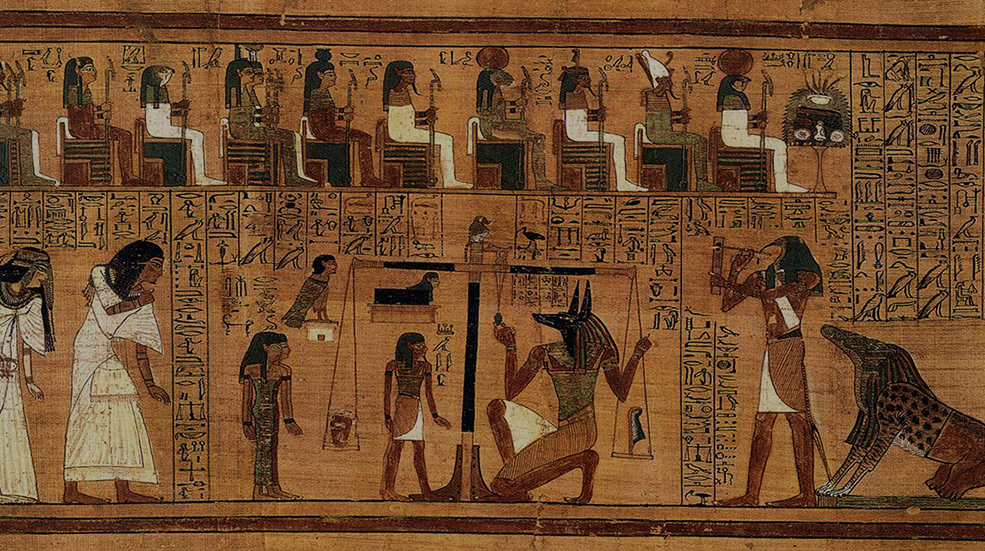
According to Ong (2002), the oral culture is without the knowledge of writings and literary culture is the knowledge of writings. Other than the difference in having knowledge of chirography, the literary culture and the oral culture still have more differences.
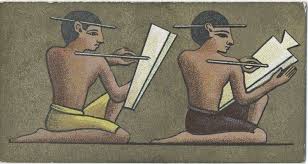
Let’s go back all the way to the beginning, to the time where there wasn’t any writing, nobody can write and no one has even thought of the possibility of writing. In the oral culture all they can do is recall, they can just say it again. In that kind of culture, they are absolutely incapable of the passing the information accurately, they can use markers but every time they taught, it will be a little bit different. There will be an alteration in the process of information transfer. Unlike in the literary culture where they know chirography, everything that happened is recorded, documented and written. In literary culture, you don’t have to call for a storytelling just to know something, just read.
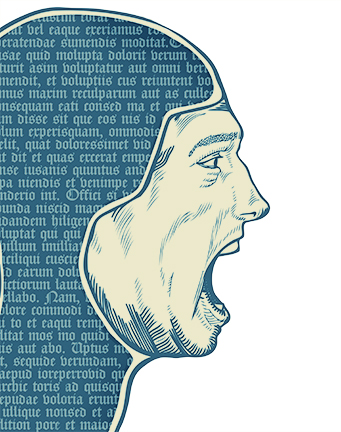
Communication can be done orally or literally. Aside from the differences of oral and literary cultures, they have similarities in the way that both culture gives information, it delivers a message. Both orality and literacy can deal with receiving and transferring information.
One of the natures of communication is its intersubjectivity, as mention in the book of Ong (2002), means that intersubjectivity in communication only happens when there is an exchange of messages between communicators. In intersubjective communication, the sender must send the information to the receiver so the receiver can respond. In the media communication, it is always a one-way communication, the information will just be placed in the receiver’s position.

Communication is a diverse field and one of its feature is the ‘media’ model of communication which is more into literacy, the media model of communication shows chirographic conditioning because in chirographic culture, written text is more informational and written text has a one-way direction of information. The purpose of this is to focus the information in the message.
People sometimes ask which communication culture is better. The question of which of the culture is better than the other then the answer is no. Again, orality and literacy is the foundation of communication and it both complement each other that paves the way for the development and connectivity of mankind.
References:
- Ong on the Differences between Orality and Literacy. Retrieved from
http://newlearningonline.com/literacies/chapter-1/ong-on-the-differences-between-orality-and-literacy - Ong, Walter J. (2002). Orality and literacy: The technologizing of the word.
London: Routledge, Taylor & Francis Group.
 Charles Earl Lyric Ycot